NAU Home Page College of Engineering, Forestry & Natural Sciences
About Us Academics Research Alumni and Friends Student Activities Resources CEFNS Home
Home | Academics | Courses
PrintForestry Courses
General information regarding Forestry courses offered in Fall 2008 may be accessed through the 'Course Schedule' link on the left navigation pane, or through http://classes.nau.edu.

Students enrolled in a Forestry course may access all course material your instructor has made available via the web by logging directly into Web CT/Vista.

FOR101 Forestry Introduction: Introduces the subject areas and career opportunities in forestry. Required of lower-division forestry students currently enrolled at NAU. (Undergraduate core requirement; Usually offered: Both Fall and Spring semesters.)
FOR199 Modular Learning Experience: Foundations of intellectual inquiry. In-depth study of a substantive problem. Letter grade only. May be repeated for up to 6 hours of credit. (Undergraduate elective; Usually offered: Varies.)
FOR203 Project Learning Tree: Project Learning Tree (PLT) is a national program of the American Forest Foundation. PLT is designed for formal and non-formal educators interested in learning and teaching environmental education. Letter grade only. (Undergraduate elective; Usually offered: Both Fall and Spring semesters.)
FOR204 Project Wild: "Set of supplemental, interdisciplinary materials dealing with wildlife management concepts and issues that can be used for environmental education. Letter grade only. (Undergraduate elective; Usually offered: Fall semesters only.)
FOR205 Project Wild Aquatic: "Set of supplemental, interdisciplinary materials dealing with aquatic ecosystems in natural environments that can be used for environmental education. Letter grade only. (Undergraduate elective; Usually offered: Fall semesters only.)
FOR207 Project Wet: "Project WET is a national water education program designed to facilitate and promote awareness, appreciation, knowledge, and stewardship of Arizona water resources through participation in hands-on activities. Letter grade only. (Undergraduate elective; Usually offered: Both Fall and Spring semesters.)
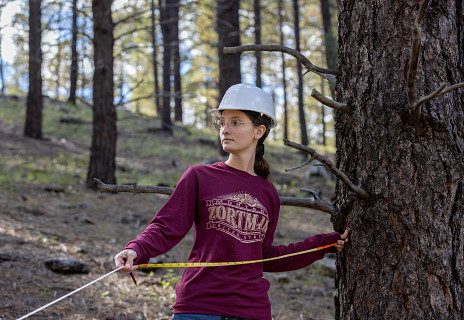
FOR211 Forest Measurements: "Fundamentals of measuring forest ecosystems and resources, land surveying, mapping, and orienteering. 2 hrs. lecture, 3 hrs. lab. (Undergraduate core requirement; Usually offered: Both Fall and Spring semesters.)
FOR212 Trees And Forests Of North America: Introduces important forest trees and forest types in North America. (Undergraduate core requirement; Usually offered: Both Fall and Spring semesters.)
FOR213 Ecology And Management Of Forest Soils: "Introduces soil science, with special emphasis on forest soils. Topics include soil formation and classification; the physical, chemical, and biological properties of soil; and impacts of human-based activities on soils. (Undergraduate core requirement; Usually offered: Spring semesters only.)
FOR215 Writing In Forestry: "An overview of and training in types of writing expected of students in the professional forestry program: technical synthesis papers, laboratory reports, memos, professional opinion pieces, and management plans. Letter grade only. (Undergraduate core requirement; Usually offered: Both Fall and Spring semesters.)
FOR220 Introduction To Forest And Range Plants: "Field identification, ecology, and uses of common forest and range plants in northern Arizona. 1 hr. lecture, 3 hrs. lab. Letter grade or pass-fail. (Undergraduate core requirement; Usually offered: Fall semesters only.)
FOR222 Environmental Conservation: Environmental quality problems in natural and human-made environments. (Undergraduate elective; Usually offered: Both Fall and Spring semesters.)
FOR230 Multicultural Perspectives Of Natural Resource Management: "Introduces the effects of culture on attitudes, institutions, and natural resource management from a US ethnic minority, multicultural perspective. (Undergraduate elective; Usually offered: Fall semesters only. Course may be used in partial fulfillment of requirements for Conservation Biology Focus Area and Indigenous Forestry Focus Area.)
FOR240 Introduction To Conservation Biology: Explores the practical issues related to people and society in maintaining the earth's biological diversity. Discusses the social environment and how to implement successful conservation of biodiversity. (Undergraduate elective; Usually offered: Spring semesters only. Course may be used in partial fulfillment of requirements for Conservation Biology Focus Area and Forest Health Focus Area.)
FOR240H Introduction To Conservation Biology - Honors: Explores the practical issues related to people and society in maintaining the earth's biological diversity. Discusses the social environment and how to implement successful conservation of biodiversity. (Undergraduate elective; Usually offered: Spring semesters only. Course may be used in partial fulfillment of requirements for Conservation Biology Focus Area and Forest Health Focus Area.)
FOR250 Arizona Forests And Wildlife: Overview of fundamental ecology and management of major forest types and wildlife of Arizona. Relationship of Arizona's forests and wildlife to North America. (Undergraduate elective; Usually offered: Both Fall and Spring semesters.)
FOR250H Arizona Forests And Wildlife - Honors: Overview of fundamental ecology and management of major forest types and wildlife of Arizona. Relationship of Arizona's forests and wildlife to North America. (Undergraduate elective; Usually offered: Both Fall and Spring semesters.)
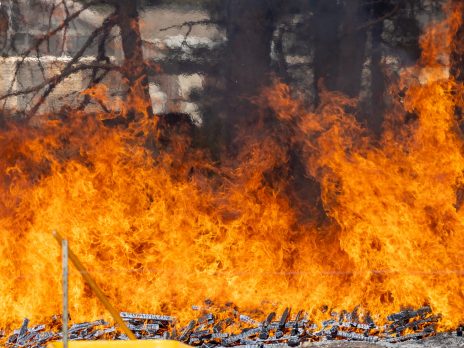
FOR251 Introduction To Wildland Fire: "An introduction to the science of wildland fire, fire's role in forested ecosystems, and wildland fire management. Letter grade only. (Undergraduate elective; Usually offered: Fall semesters only.)
FOR254 Introduction To Forest Health: "This is an introductory course in forest health. The course covers basic forest health concepts and the definition of forest health. The role that forest diseases, insects, and fire play in natural forest ecosystems and their interactions will be introduced. The course also covers the increasing threat posed by exotic and invasive organisms in the United States. Programs designed to monitor forest health around the World are discussed. (Undergraduate elective; Usually offered: Fall semesters only. Course may be used in partial fulfillment of requirements for Forest Health Focus Area.)
FOR255 International Wildlife Issues: "Current international issues in wildlife conservation and management. Topics include regulation of global wildlife, threats to biodiversity, and issues of sustainable management and protection. Case studies focus on perspectives of ethnic minorities. (Undergraduate elective; Usually offered: Fall semesters only. Course may be used in partial fulfillment of requirements for Conservation Biology Focus Area and Indigenous Forestry Focus Area.)
FOR255H International Wildlife Issues: "Current international issues in wildlife conservation and management. Topics include regulation of global wildlife, threats to biodiversity, and issues of sustainable management and protection. Case studies focus on perspectives of ethnic minorities. Letter grade only. (Undergraduate elective; Usually offered: Varies.)
FOR270 Native American Ecology: "Uses introductory ecology and natural science principles to critically review literature and information about the geographic distribution, traditional land use, and conservation knowledge of indigenous peoples in North America. Pass-fail or letter grade. (Undergraduate elective; Usually offered: Fall semesters only.)
FOR270H Native American Ecology - Honors: "Uses introductory ecology and natural science principles to critically review literature and information about the geographic distribution, traditional land use, and conservation knowledge of indigenous peoples in North America. Letter grade or pass-fail. (Undergraduate elective; Usually offered: Fall semesters only.)
FOR282 Ecological Restoration Principles: Concepts and theories of ecological science related to restoring natural structures and processes of ecosystems. Letter grade only. Instructor's consent required. (Undergraduate elective; Usually offered: Spring semesters only. Course may be used in partial fulfillment of requirements for Ecological Restoration Focus Area and Forest Health Focus Area.)
FOR282H Ecological Restoration Principles-honors: Concepts and theories of ecological science related to restoring natural structures and processes of ecosystems. Letter grade only. (Undergraduate elective; Usually offered: Spring semesters only. Course may be used in partial fulfillment of requirements for Ecological Restoration Focus Area and Forest Health Focus Area.)
FOR283 Forestry In The Wildland-urban Interface (wui): "Overview of issues, concepts, and methods for managing forests in the wildland-urban interface. Emphasis on managers' roles in reducing risks to forest and human communities, while sustaining benefits to both. (Undergraduate elective; Usually offered: Spring semesters only.)
FOR298 Modular Learning Experience: "In-depth study of an aspect, concept, or problem. Letter grade only. May be repeated for up to 6 hours of credit. (Undergraduate elective; Usually offered: Varies.)
FOR299 Modular Learning Experience: "In-depth study of an aspect, concept, or problem. May be repeated for up to 6 hours of credit. (Undergraduate elective; Usually offered: Varies.)
FOR310 Forest Ecology For Professionals: Forest Ecology studies the abiotic and biotic components affecting the structure, composition, and function of forests, individuals, populations, communities, landscapes and ecosystems. (Undergraduate elective; Usually offered: Fall semesters only.)
FOR313 Forest Ecology I: "Studies abiotic and biotic components affecting the structure, composition, and function of forests: individuals, populations, and communities. 3 hrs. lecture, 1 hr. lab. (Undergraduate core requirement; Usually offered: Fall semesters only.)
FOR314 Forest Ecology II: "Studies abiotic and biotic components affecting the structure, composition, and function of forests: landscapes and ecosystems. (Undergraduate core requirement; Usually offered: Fall semesters only.)
FOR315 Silviculture Principles: Art and science of growing trees in forested stand: principles. (Undergraduate core requirement; Usually offered: Fall semesters only.)
FOR316 Silviculture Applications: "Art and science of growing trees in forested stands: applications. 2 hrs. lecture, 1 hr. lab. (Undergraduate core requirement; Usually offered: Fall semesters only.)
FOR323W Forest Management I: Studies techniques and skills needed to manage complex forested ecosystems for the generation of goods and services. This course fulfills NAU's junior-level writing requirement. (Undergraduate core requirement; Usually offered: Spring semesters only.)
FOR324W Forest Management II: Studies role of human needs and values in the management of forested ecosystems. This course fulfills NAU's junior-level writing requirement. (Undergraduate core requirement; Usually offered: Spring semesters only.)
FOR325W Forest Management III: Evaluates interactions between and among competing and complementary uses of forested ecosystems within a human context. This course fulfills NAU's junior-level writing requirement. (Undergraduate core requirement; Usually offered: Spring semesters only.)
FOR326W Forest Management IV: "Integrates principles of forest ecosystem management across spatial, temporal, and geopolitical scales. This course fulfills NAU's junior-level writing requirement. (Undergraduate core requirement; Usually offered: Spring semesters only.)
FOR340 Environmental Hydrology: "An introduction into environmental implications of extreme hydrological processes, the effects of natural and human activities on the hydrology and water resources of an area, and related problems and solutions. Letter grade only. (Undergraduate elective; Usually offered: Fall semesters only.)
FOR340H Environmental Hydrology-honors: "An introduction into environmental implications of extreme hydrological processes, the effects of natural and human activities on the hydrology and water resources of an area, and related problems and solutions. Letter grade only. (Undergraduate elective; Usually offered: Fall semesters only.)
FOR340L Environmental Hydrology Lab: "Practical lab and field measurement and evaluation for FOR 340. Here students will learn about various in-situ environmental hydrology problems and related measurement, data collection and analysis approaches. Letter grade only. (Undergraduate elective; Usually offered: Fall semesters only.)
FOR351 Fire Monitoring And Modeling: In this course we cover key fire monitoring protocols used by federal land management agencies, along with several different types of models used to predict fire effects and fire behavior. (Undergraduate elective; Usually offered: Fall semesters only.)
FOR360 Natural Resources Policy: Fundamentals of the natural resource policy making and implementation process. Focus on legislative history and current policy topics for United States land management agencies. Letter grade only. Department consent required. (Undergraduate elective; Usually offered: Spring semesters of even years only.)
FOR370 Indigenous Knowledge : Ecological Implications: Uses advanced ecology and natural science principles to critically review literature and information about the ecological implications of indigenous people's resource use strategies. Letter grade or pass-fail. (Undergraduate elective; Usually offered: Spring semesters only. Course may be used in partial fulfillment of requirements for Conservation Biology Focus Area.)
FOR381 Forest Ecosystem Management: "Explores the tools and practices for mimicking natural patterns of variation in forest ecosystems and for adaptive management over time and space. 2 hrs. lecture, 3 hrs. lab. (Undergraduate elective; Usually offered: Spring semesters of odd years only.)
FOR382 Ecological Restoration Applications: Examples and applications of ecological science related to restoring natural structures and processes of ecosystems. Coconvenes with FOR 582. Letter grade only. Instructor's consent required. (Undergraduate elective; Usually offered: Fall semesters only. Course may be used in partial fulfillment of requirements for Ecological Restoration Focus Area.)
FOR382H Ecological Restoration Applications-honors: Examples and applications of ecological science related to restoring natural structures and processes of ecosystems. Letter grade only. (Undergraduate elective; Usually offered: Fall semesters only. Course may be used in partial fulfillment of requirements for Ecological Restoration Focus Area.)
FOR398 Modular Learning Experience: "In-depth study of an aspect, concept, or problem within a program of study. May be repeated for up to 6 hours of credit. (Undergraduate elective; Usually offered: Varies.)
FOR399 Modular Learning Experience: "In-depth study of an aspect, concept, or problem within a program of study. Letter grade only. May be repeated for up to 6 hours of credit. (Undergraduate elective; Usually offered: Varies.)
FOR408 Fieldwork Experience: Individualized supervised field experience in an appropriate agency or organization. Pass-fail only. Fee required. Department consent required. (Undergraduate elective; Usually offered: Both Fall and Spring semesters. Course may be used in partial fulfillment of requirements for Ecological Restoration Focus Area.)
FOR413C Forest Ecosystem Assessment I: "Studies principles and foundations of the techniques and practices required to characterize forest conditions. 2 hrs. lecture, 1 hr. lab. (Undergraduate core requirement; Usually offered: Fall semesters only.)
FOR414C Forest Ecosystem Assessment II: "Applies techniques and practices required to characterize forest conditions. 2 hrs. lecture, 1 hr. lab. (Undergraduate core requirement; Usually offered: Fall semesters only.)
FOR415 Forestry In Developing Countries: "Ecology, management, and policy issues related to forests in developing countries from the social, political, economic and cultural perspective of indigenous people. Co-convenes with FOR 515. Letter grade only. (Undergraduate elective; Usually offered: Spring semesters only. Course may be used in partial fulfillment of requirements for Conservation Biology Focus Area and Indigenous Forestry Focus Area.)
FOR423C Forest Ecosystem Planning I: "Understanding of tools, techniques, and approaches for developing short- and long-term landscape-level forest management plans. 2 hrs. lecture, 1 hr. lab. (Undergraduate core requirement; Usually offered: Spring semesters only.)
FOR424C Forest Ecosystem Planning II: "Applies planning tools for the development of landscape-level forest management plans. 2 hrs. lecture, 1 hr. lab. (Undergraduate core requirement; Usually offered: Spring semesters only.)
FOR430 Leadership And The Environment: Development of knowledge and expertise in leading the decision-making process regarding environmental or resource issues. (Undergraduate elective; Usually offered: Spring semesters only.)
FOR441 Sustainable Forestry In Tropical Ecosystems: International Field Experience: International field course on forestry issues in developing countries from the perspective of forestry professionals in those countries. Course venue varies. Instructor's consent required. (Undergraduate elective; Usually offered: Spring semesters only. Course may be used in partial fulfillment of requirements for Conservation Biology Focus Area and Indigenous Forestry Focus Area.)
FOR442 Principles Of Wood Science And Technology: Basic principles of wood science: species identification and properties of wood as related to products and utilization. (Offer fall semester.) Co-convenes with FOR 542. Letter grade only. (Undergraduate elective; Usually offered: Fall semesters only.)
FOR443 Ecology And Management Of Introduced Species In Forests And Rangelands: "An exploration of introduced species, including how land managers and policy makers are dealing with such species and case studies of specific introduced species. Letter grade only. (Undergraduate elective; Usually offered: Spring semesters only.)
FOR444 Wilderness Management For Professionals: This course is designed specifically for natural resource professionals and will examine wilderness management issues from a multidisciplinary approach, using current and historical readings along with sharing professional knowledge and firsthand experiences in managing designated tracts of lands for permanent preservations. Letter grade only. Course fee required. (Undergraduate elective; Usually offered: Fall semesters only.)
FOR445 Wilderness Management: "the philosophical, historical, legal, ecological, social, and cultural aspects of lands managed under the Wilderness Act. Prerequisite: upper-division coursework in areas related to natural resources management or science. (Undergraduate elective; Usually offered: Fall semesters only.)
FOR447 Human-forest Interactions From Community Perspective: "Social science theory, concepts and analytic techniques for understanding human-forest ecosystems, form the perspective of human communities as a fundamental unit of social organization relevant to landscape-level processes. Letter grade only. Instructor's consent required. (Undergraduate elective; Usually offered: Fall semesters only.)
FOR451 Fire Ecology And Management: Wildland fire is a disturbance force with important ecological and social implications in most of the world’s ecosystems. This course integrates ecological and cultural aspects of wildland fire, providing a broad foundation for people interested in natural resource management, fire management, and ecological science. (Undergraduate elective; Usually offered: Spring semesters only.)
FOR452 Forest Pathology: "Important forest tree diseases, their identification, ecology, and management. Co-convenes with FOR 552. 2 hrs. lecture, 3 hrs. lab. Letter grade or pass-fail. (Undergraduate elective; Usually offered: Fall semesters only. Course may be used in partial fulfillment of requirements for Forest Health Focus Area.)
FOR453 Forest Insects: "Identification, biology, population dynamics, ecological role, and management of forest insects in western forests. Co-convenes with FOR 553. Letter grade only. (Undergraduate elective; Usually offered: Spring semesters of even years only. Course may be used in partial fulfillment of requirements for Forest Health Focus Area.)
FOR454 Forest Health: Modern concepts of maintaining tree health and the relationships between tree and forest health. Agents and processes of decline in forest ecosystems. Coconvenes with FOR 554. Letter Grade Only (Undergraduate elective; Usually offered: Spring semesters of even years only. Course may be used in partial fulfillment of requirements for Forest Health Focus Area.)
FOR465 Watershed Restoration: Watershed Restoration. Students will explore the effects of natural and anthropogenic activities on watershed conditions, and learn various approaches of restoring or handling any adverse effects of such disturbances on watershed ecosystems. Usual instructor: Tecle. (Undergraduate elective; Usually offered: Spring semesters of odd years only.)
FOR479 Ecosystem Ecology: "Principles of ecosystem ecology, including the factors controlling ecosystem structure, productivity, nutrient cycling, and energy balance-with examples from the Colorado Plateau and emphasis on global environmental change. Crosslisted as BIO 479. 2 hrs. lecture, 3 hrs. lab. (Undergraduate elective; Usually offered: Spring semesters of even years only. Course may be used in partial fulfillment of requirements for Forest Health Focus Area.)
FOR485 Undergraduate Research: Individualized original research under the supervision of a research adviser. Pass-fail only. May be repeated for up to 6 units of credit. Department consent required. (Undergraduate elective; Usually offered: Both Fall and Spring semesters. Course may be used in partial fulfillment of requirements for Ecological Restoration Focus Area.)
FOR493 Natural Resource Economics: Application of economic theories to explore the current issues in natural resource management. Emphasis is on developing one's own point of view in applying economic principles to natural resource management. Co-convenes with FOR 593. Letter grade only. (Undergraduate elective; Usually offered: Fall semesters only. Course may be used in partial fulfillment of requirements for Conservation Biology Focus Area.)
FOR497 Independent Study: Individualized approach to selected topics by guided reading and critical evaluation. Pass-fail only. Department consent required. (Undergraduate elective; Usually offered: Both Fall and Spring semesters.)
FOR498 Senior Seminar: "Integrates theory and practice, with emphasis on historical, contemporary, and future issues. (Undergraduate elective; Usually offered: Both Fall and Spring semesters.)
FOR499 Contemporary Developments: Examines recent trends and investigations in a selected area. Letter grade only. (Undergraduate elective; Usually offered: Both Fall and Spring semesters.)
FOR500 Ecosystem Science And Management Principles: "General systems overview of biophysical, social, and political factors associated with forestry. Emphasizes wildlife, recreation, and other noncommodity resources. ( Usually offered: Fall semesters of even years only.)
FOR503 Management Science Modeling For Multi-resource Management: Linear and nonlinear mathematical programming models and their application to forestry in a multi-resource management context. ( Usually offered: Fall semesters of odd years only.)
FOR504 Forest Wildlife Ecology And Management: "After brief overview of theory and practice, course involves critically evaluating current literature on a specific management concern, such as migratory birds, predators, or endangered species. Prerequisite: one course in general biology or ecology. ( Usually offered: Spring semesters of even years only.)
FOR505 Forestry Seminar Series: Weekly presentations by leading scientists in biological and social sciences describing current projects in forestry and wildland management, followed by an informal discussion period. Each student reads scientific papers by 2 of the speakers (selected by the student). Students collaborate to identify and invite speakers for the following semester. Every semester. May repeat for credit. ( Usually offered: Both Fall and Spring semesters.)
FOR506 Special Studies In Forestry: Individual investigation of a specially assigned topic. ( Usually offered: Both Fall and Spring semesters.)
FOR514 Field Identification Of Birds: This course will teach students how to identify common forest birds of northern Arizona by sight and sound and provide an overview of sampling techniques used for monitoring forest-dwelling birds. All 5 class meetings are in the field. Usual instructor: Chambers. ( Usually offered: Spring semesters only.)
FOR515 Forestry In Developing Countries: "Ecology, management, and policy issues of tropical and arid land forests in developing countries. Co-convenes with FOR 415. Letter grade only. ( Usually offered: Spring semesters only.)
FOR520 Applied Forest Stand Dynamics: "Theory and practice of regulating forest composition, structure, and growth rates to meet multiple land-management objectives. Letter grade only. ( Usually offered: Spring semesters only.)
FOR521 Advanced Topics In Ecosystem Ecology And Wildland Soils: Advanced Topics in Ecosystem Ecology and Wildland Soils. Course utilizes directed readings and discussion of classical and current literature in ecosystem ecology and wildland soils, with an emphasis on land management impacts and global environmental change. Prerequisite: FOR 213 or 479 or BIO 479 or equivalent. Usual instructor: Hart. ( Usually offered: Spring semesters of odd years only.)
FOR524 Aerial Photo Interpretation: "Basic photogrammetric principles; uses of aerial photographs to identify and map vegetation, physiography, and cultural features. ( Usually offered: Spring semesters of even years only.)
FOR525 Gis And Spatial Techniques In Forestry: Application of geographic and spatial techniques to research and management in forestry, wildland management, and conservation planning. Seminar format may include analysis of data provided by instructor or students. Usual instructor: Dewhurst. ( Usually offered: Both Fall and Spring semesters.)
FOR530 Ecological Restoration Principles For Practitioners: This course is designed for land management practitioners who desire current information about applying ecological restoration principles to ponderosa pine ecosystems of the Southwestern U.S. Instructor's consent required. ( Usually offered: Varies.)
FOR541 Wood Products: Technical aspects of marketing wood products. ( Usually offered: Spring semesters of even years only.)
FOR542 Principles Of Wood Science And Technology: This course covers physical and mechanical properties of wood and how wood properties affect the use of and performance of these products in service. Co-convenes with FOR 442. Letter grade only. ( Usually offered: Fall semesters only.)
FOR544 Landscape Ecology: Theory and application of landscape ecology. Course examines scale-related issues and spatial patterns in natural and human-dominated landscapes; and their role in determining the structure and function of ecological systems. Crosslisted with ENV 544. Usual instructor: Moore. ( Usually offered: Spring semesters of even years only.)
FOR550 Forest Tree Ecophysiology: Effects of environment on physiological processes in forest trees. Prerequisites: college chemistry (including organic) and general or forest ecology. Usual instructor: Kolb. ( Usually offered: Spring semesters of even years only.)
FOR551 Fire Ecology And Management: Ecological effects of wildland fires, fire regimes, fire management, prescribed fire, and the application of fire science to restoring and managing ecosystems. Letter grade or pass-fail. Usual instructor: Thode or Fule. ( Usually offered: Spring semesters only.)
FOR551L Fire Ecology And Management Lab: "Field and computer lab applications in wildland fire: fuel sampling, fire behavior prediction, modeling fire effects, and prescribed burning. 3 hrs. lab. Letter grade or pass-fail. ( Usually offered: Spring semesters only.)
FOR552 Forest Tree Diseases: "Important forest tree diseases: their identification, ecology, and management. Co-convenes with FOR 452. Letter grade or pass-fail. ( Usually offered: Fall semesters only.)
FOR553 Forest Entomology: "Important forest insects, their ecology and control. Co-convenes with FOR 453. Letter grade only. ( Usually offered: Spring semesters of even years only.)
FOR554 Integrated Forest Health: Agents and processes of forest decline; methods of managing and monitoring forest health. Coconvenes with FOR 454. Letter Grade Only ( Usually offered: Spring semesters only.)
FOR560 Wetland Ecology And Management: "This course covers the major environmental factors responsible for wetland structure and function, as well as current issues related to wetland management and policy. Letter grade only. Prerequisite: Undergraduate ecology course or permission of instructor. ( Usually offered: Spring semesters only.)
FOR563 Watershed Hydrology: Hydrologic principles and practices related to the land-water system; emphasis on the effects of climate, soils, vegetation, and land-use factors on the quantity and quality of runoff. Usual instructor: Tecle. ( Usually offered: Spring semesters of odd years only.)
FOR565 Watershed Restoration: Watershed Restoration. Students will explore the effects of natural and anthropogenic activities on watershed conditions, and learn various approaches of restoring or handling any adverse effects of such disturbances on watershed ecosystems. Usual instructor: Tecle. ( Usually offered: Spring semesters of odd years only.)
FOR573 Issues In Recreation Management: Theory and trends in recreational use of wildlands; management of recreation resources; economic concepts of recreation. ( Usually offered: Fall semesters of odd years only.)
FOR580 Ecological Restoration Principles: Course designed to explore central concepts and philosophical underpinnings of ecological restoration. ( Usually offered: Spring semesters only.)
FOR582 Ecological Restoration Applications: Examples and applications of ecological science related to restoring natural structures and processes of ecosystems. Co-convenes with FOR 382. Letter grade or pass-fail. ( Usually offered: Fall semesters only.)
FOR590 Economic And Social Issues In Forest Recreation Development: Economic and social issues in promoting rural economic development and a quality rural environment through forest recreation development in the West. ( Usually offered: Fall semesters only.)
FOR593 Natural Resource Economics: Application of advanced methods in analyzing multi-resource forest economics problems. Co-convenes with FOR 493. Letter grade only. ( Usually offered: Fall semesters only.)
FOR599 Contemporary Developments: Examines recent trends and investigations in a selected area of a particular field of study. May be offered no more than three times before being submitted for a permanent course number. May be repeated for credit. Letter grade only. ( Usually offered: Varies.)
FOR603 Forest Biometrics: Quantitative approach to the study and construction of forest growth and yield models. recommended: calculus. Usual instructor: Parysow. ( Usually offered: Spring semesters of odd years only.)
FOR604 Wildlife Habitat Relationships: Systems approach to comprehending the associations with and uses of habitat by wildlife. Letter grade only. ( Usually offered: Fall semesters of odd years only.)
FOR605 Natural Resources Policy Analysis: Natural Resources Policy Analysis. Students will investigate how to analyze the natural resource policy process including; substance, actors, institutions, interest groups, and the role of social values in policy content. The course will include a review of current multi-resource philosophy, law and regulations. Usual instructor: Ostergren. ( Usually offered: Fall semesters only.)
FOR625 Applied Conservation Biology: Applied Conservation Biology. Class focuses on practice, rather than theory, of conservation biology, and on conservation in managed, rather than strictly protected, landscapes. Topics include collaborative conservation efforts, adaptive management, assessment tools, and integrated conservation and development projects in developing countries. Usual instructor: Beier. ( Usually offered: Fall semesters of odd years only.)
FOR633 Ecological Economics: "Theory of ecological economics, which is the union of ecology and economics, and its application to natural resource management. Addresses both micro and macro aspects of ecological economics. ( Usually offered: Spring semesters of odd years only.)
FOR685 Graduate Research: "Graduate research that is not part of a thesis, dissertation, or professional paper. Letter grade or pass-fail. Department consent required. ( Usually offered: Both Fall and Spring semesters.)
FOR689 Professional Paper: Preparation of a professional paper if you are in the nonthesis master's program. Department consent required. ( Usually offered: Both Fall and Spring semesters.)
FOR690 Research Methods: Scientific method; investigative procedures; formulation of hypotheses; problem selection and analysis; preparation of a research working plan. ( Usually offered: Fall semesters only.)
FOR692 Proseminar I: "Design, preparation, and presentation of professional seminars. Department consent required. ( Usually offered: Both Fall and Spring semesters.)
FOR693 Teaching Practicum: Examination and discussion of effective teaching methods. Teaching experience. ( Usually offered: Spring semesters only.)
FOR694 Supervised Teaching In Forestry: "Practical application of learner-centered, active teaching and assessment methods in undergraduate Forestry courses. Forestry faculty will mentor graduate students in the implementation of effective teaching. ( Usually offered: Both Fall and Spring semesters.)
FOR695 Advanced Studies In Forestry: "Directed study in a forestry subject, with area to be specified at registration. ( Usually offered: Varies.)
FOR697 Independent Study: "Individualized directed study on selected topics. Pass-fail or letter grade, depending on departmental policy. (See the section titled Independent Study in the Degree Requirements chapter of this catalog for more information.) Department consent required. ( Usually offered: Both Fall and Spring semesters.)
FOR698 Graduate Seminar: "Reading and discussion on selected advanced topics. Pass-fail or letter grade, depending on departmental policy. ( Usually offered: Both Fall and Spring semesters.)
FOR699 Thesis: "Individualized directed research, writing, and oral defense of selected thesis topic. May be repeated as needed. Prerequisite: Admission to master's program. Department consent required. ( Usually offered: Both Fall and Spring semesters.)
FOR799 Dissertation: "Individualized directed research, writing, and oral defense of selected dissertation topic. Department consent required. ( Usually offered: Both Fall and Spring semesters.)


Last Updated ( Wednesday, 13 August 2008 )

CONTACT NAU FORESTRY | SITE MAP | TEXT ONLY


© 2007 Arizona Board of Regents.
Northern Arizona University, South San Francisco Street, Flagstaff, Arizona 86011